CodetoKloudCodetoKloudBook an AWS review

Microservices Delivery on EKS with GitOps Controls

A product team needed to replace manual application releases with containerized microservices, environment-specific configuration, and controlled promotion to production. We built a GitOps delivery path around Amazon EKS, Helm, and ArgoCD.

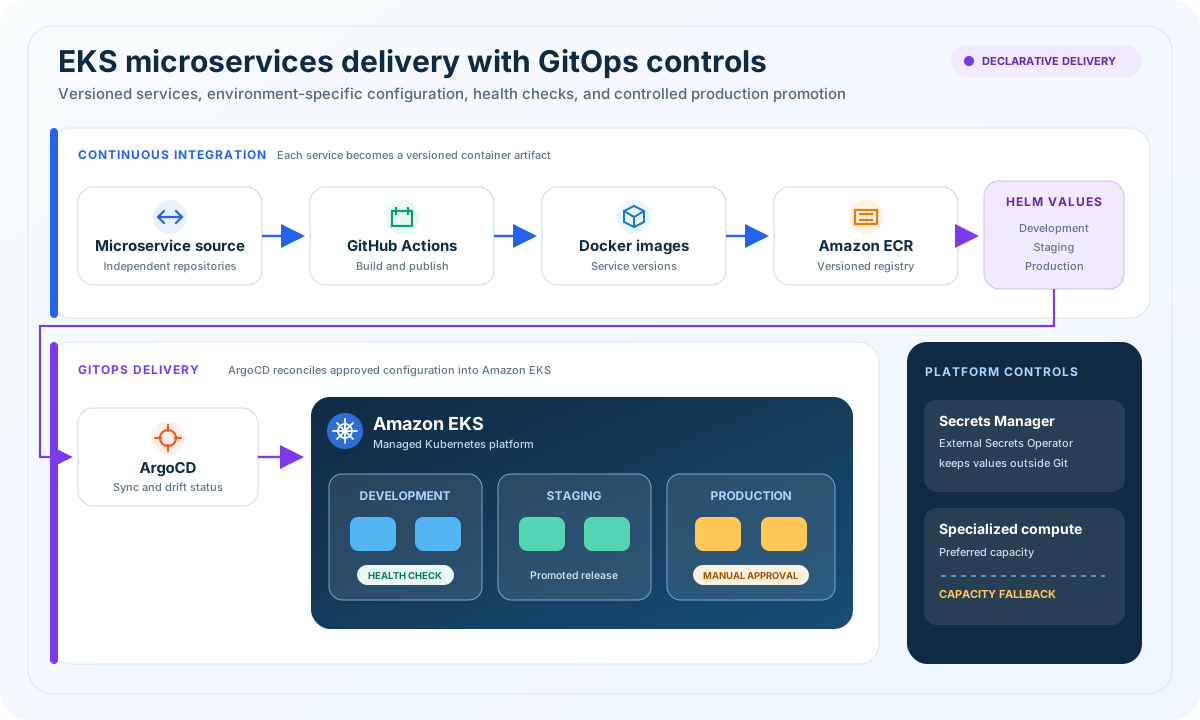
GitOps delivery diagram showing GitHub Actions building microservice containers, pushing images to Amazon ECR, updating environment-specific Helm configuration, and ArgoCD deploying to Amazon EKS with health checks and production approval.
AWS Advanced Tier Services PartnerAWS Advanced Tier Partner★ 4.9/5 on Clutch (9 reviews)Replies within 1 business day

The Challenge

A microservices application still depended on manual deployment steps. Releases needed a consistent container build, clear environment promotion, and a reliable way to keep credentials out of source control.

One workload also required specialized compute capacity. When preferred capacity was not available, the delivery design needed a fallback path rather than leaving that service blocked indefinitely.

What We Built

Microservice Containerization

We created optimized Docker build definitions for the application services so each component could be built, versioned, and released independently.

GitHub Actions to Amazon ECR

GitHub Actions built the service images, pushed versioned artifacts to Amazon ECR, and updated the image reference used by the deployment configuration.

Environment-Specific Helm Configuration

Helm values separated development, staging, and production configuration. The same chart structure could therefore promote a tested release without copying deployment manifests between environments.

ArgoCD Reconciliation

ArgoCD synchronized approved configuration into Amazon EKS. Automated post-deployment health checks provided a clear signal after each development release.

Controlled Production Promotion

Production releases required manual approval and were coordinated within planned maintenance windows, adding a deliberate control before customer-facing changes.

External Secrets and Capacity Fallback

AWS Secrets Manager and External Secrets Operator kept sensitive values outside Git. We also added a fallback strategy for specialized compute capacity when the preferred option was temporarily unavailable.

The Result

  • The application services were packaged as independently versioned containers and delivered through a repeatable EKS workflow.
  • Development releases gained automated reconciliation and post-deployment health checks, while production retained a manual approval gate.
  • Sensitive configuration remained outside the Git repository, and specialized workloads gained a documented capacity fallback path.

Technology

Amazon EKSArgoCDHelmGitHub ActionsAmazon ECRDockerAWS Secrets ManagerExternal Secrets Operator

Planning a similar platform?

Share the constraint behind your cloud, delivery, Kubernetes, or compliance project. We will confirm fit and identify three useful priorities for the first conversation.

Book an AWS review