
How GoAgalia Modernized a Healthcare Platform on AWS
Amazon EKS, GitOps, private data services, and observability improved performance, recovery, and infrastructure cost.
About the Customer
GoAgalia provides workforce management software for hospitals and healthcare facilities. Its platform supports scheduling, placement coordination, and payroll workflows for medical staff. Those workflows require reliable access and careful handling of sensitive workforce data.
Problem Statement
GoAgalia's infrastructure could not scale cleanly during peak scheduling periods as the company added hospital networks. The healthcare workforce platform handled sensitive employee data, but its existing environment lacked the security controls, encryption, and audit evidence needed to support HIPAA workloads. Manual deployments created inconsistent environments and took several hours, while over-provisioned resources increased AWS cost. GoAgalia needed to improve performance, delivery, security, and cost without disrupting a platform used by healthcare operations.
CLIENT
GoAgalia
PROJECT SCHEDULE
Dec 2024 to June 2025
PROJECT SIZE
$200,000 to $499,999
Proposed Solution
Amazon EKS (Elastic Kubernetes Service)
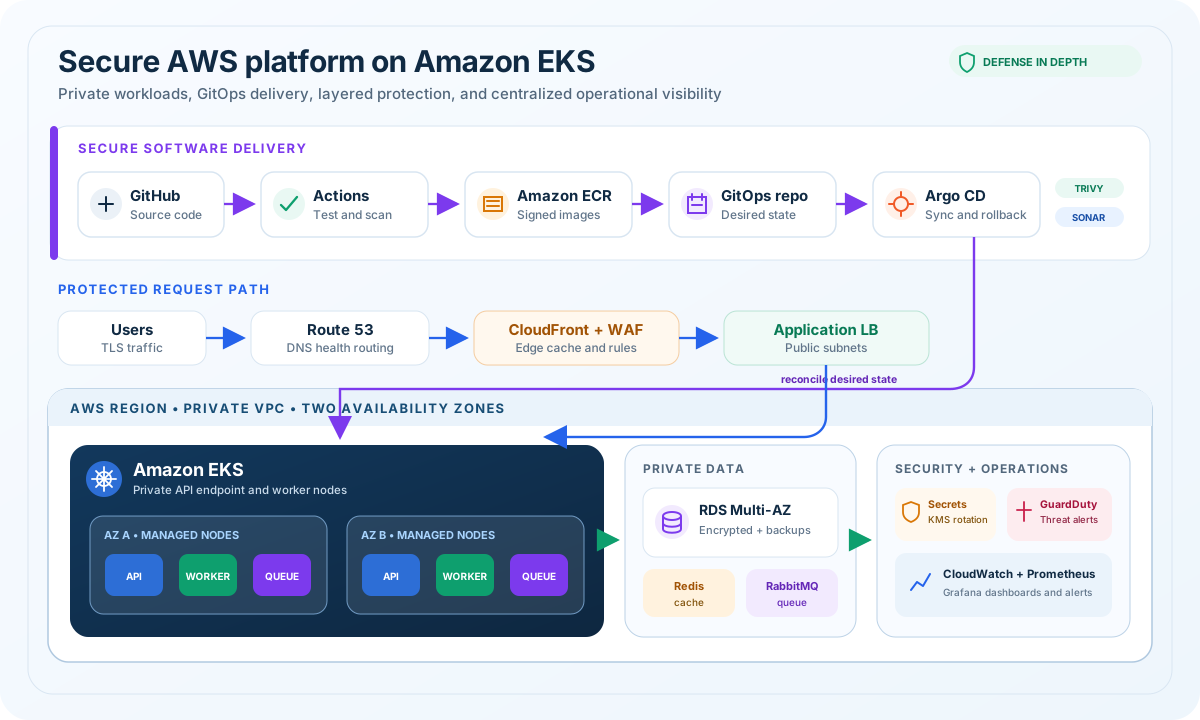
Backend services and supporting workloads moved to a private Amazon EKS cluster with managed node groups that scale with demand. Redis and RabbitMQ ran as containerized workloads for caching and message queuing.
Amazon VPC with Multi-Tier Architecture
A multi-tier VPC used public and private subnets across multiple Availability Zones. EKS workloads had no direct inbound internet access, while an Application Load Balancer routed approved external traffic.
Amazon RDS with High Availability
Amazon RDS ran in private subnets with Multi-AZ availability, automated backups, and encryption through AWS KMS. AWS Secrets Manager handled database credentials and rotation, while read replicas moved reporting queries away from the primary database.
AWS Amplify and Amazon CloudFront
AWS Amplify deployed the frontend with automated HTTPS and CI/CD integration. Amazon CloudFront cached static assets closer to users and reduced repeated work at the application origin.
GitOps CI/CD Pipeline
GitHub Actions handled continuous integration and Argo CD reconciled deployments from version control. Terraform and Kubernetes manifests made infrastructure and application changes reproducible and reviewable.
Comprehensive Monitoring and Security
Datadog and Amazon CloudWatch monitored services and infrastructure. AWS CloudTrail recorded account activity, AWS Config tracked configuration, AWS WAF protected the load balancer, and CrowdStrike Falcon added endpoint threat detection.
AWS Backup and Disaster Recovery
AWS Backup protected RDS and EBS data, with cross-region copies for critical recovery data. The team documented recovery procedures and used infrastructure as code to make the platform reproducible.
The solution connected private application runtime, managed data, automated delivery, technical safeguards, and recovery procedures in one AWS operating model for GoAgalia.
Core tech stack we work with
Leveraging the Leading Programming Languages and Frameworks to Deliver Reliable, Scalable Solutions.



Outcomes & Success Metrics
Measurable improvements in performance, reliability, scalability, and cost.
Results and Benefits
For this engagement, average API response time decreased from 850ms to 320ms. The platform handled 2.5x more concurrent users during peak scheduling periods, with EKS capacity adjusting to workload demand.
Deployment time decreased from 3-4 hours of manual work to under 40 minutes through the automated delivery workflow. Infrastructure cost decreased by approximately 35% after right sizing and auto scaling were applied to the measured workload.
The platform implemented the technical safeguards described above to support HIPAA workloads. Measured uptime improved to 99.7%, and mean time to recovery improved from more than 40 minutes to 10-12 minutes. The stronger capacity and recovery posture supported GoAgalia as it onboarded additional hospital networks after the migration.
Modernizing a healthcare workload on AWS?
We can review your runtime, data protection, delivery, recovery, and cost priorities and identify the first three actions for the environment.
Review my healthcare platform