
AWS landing zone and account structure
We define the account layout, environment boundaries, baseline guardrails, logging destinations, and ownership model needed to separate workloads without making access or billing harder to manage.
Design, deploy, and optimize AWS cloud infrastructure for stronger reliability, security, and cost control. Get practical support from architecture and automation through ongoing operations.
 AWS Advanced Tier Partner★ 4.9/5 on Clutch (9 reviews)Replies within 1 business day
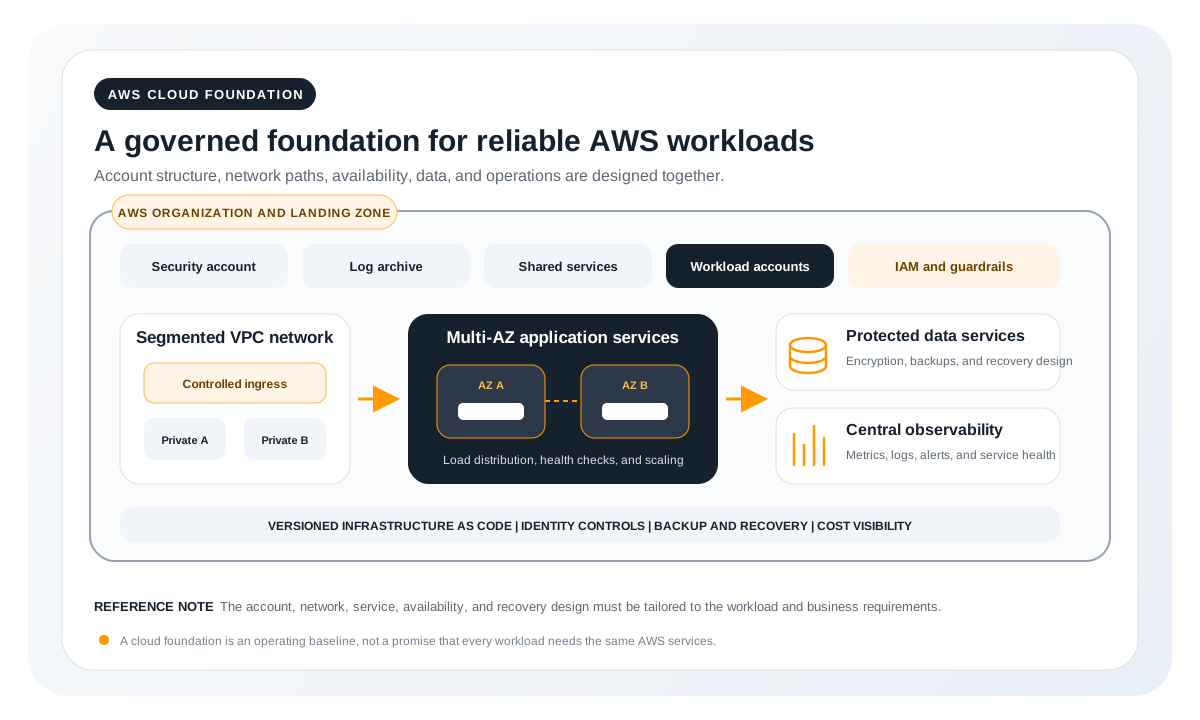
An AWS cloud infrastructure service designs and implements the shared foundation that applications need to run securely and reliably. It connects account structure, networking, IAM, infrastructure as code, resilience, observability, backup, and operational ownership into one maintainable environment.
CodetoKloud works from workload requirements and team constraints. The goal is an AWS foundation your engineers can understand, change through code, monitor in production, and recover according to agreed business needs.
The scope is tailored to the workload, but each deliverable has a clear owner and an operational purpose.
We define the account layout, environment boundaries, baseline guardrails, logging destinations, and ownership model needed to separate workloads without making access or billing harder to manage.
We design VPCs, public and private subnets, routing, ingress, egress, service connectivity, and hybrid access around the systems that must communicate and the paths that must remain isolated.
We map human and workload identities to least privilege roles, reduce standing access where practical, protect secrets, and document how engineers reach production systems.
We implement the agreed foundation with Terraform or CloudFormation so changes are version controlled, reviewable, repeatable, and less dependent on manual console work.
We match Multi-AZ architecture, health checks, scaling, managed services, failure boundaries, and recovery procedures to the workload's actual availability requirements.
We connect infrastructure and service metrics, logs, dashboards, and alerts to the operating questions your team must answer during a release or incident.
We define what must be backed up, how long recovery data is retained, where copies are stored, and how restore procedures will be tested for the selected AWS services.
We provide architecture diagrams, code ownership, access procedures, runbooks, known constraints, and a prioritized backlog so your team can operate and improve the platform after delivery.
We make the architecture decisions explicit, validate the important operating paths, and transfer ownership with the implementation.
We review applications, data flows, dependencies, environments, access paths, reliability needs, recovery expectations, cloud costs, and the people responsible for day to day operation.
We turn those requirements into account, network, IAM, resilience, observability, backup, and infrastructure as code decisions, with tradeoffs documented before implementation.
We implement the agreed foundation, connect a representative workload, and validate access, deployment, monitoring, failure response, backup, and restore behavior against the project criteria.
We walk the team through the code and operating procedures, resolve handoff gaps, and leave a prioritized list for capacity, security, reliability, and cost improvements that remain outside the initial scope.
These case studies show how CodetoKloud applied cloud foundations to specific customer constraints. Results belong to those engagements and are not a guarantee for every workload.
CodetoKloud standardized four application brands on ECS Fargate, Aurora MySQL Multi-AZ, Application Load Balancers, AWS Amplify, and GitHub Actions with OIDC and AWS Secrets Manager.
CodetoKloud moved the SaaS workload to private Amazon EKS and RDS tiers with AWS WAF, controlled access, automated delivery, Prometheus, Grafana, and retained recovery data.
Bring your current AWS account layout, architecture, operating concerns, and upcoming workload. We will help identify the first foundation decisions worth addressing.
AWS, infrastructure as code, container, automation, and observability tools support repeatable cloud foundations and production operations.



Engineering guides
Review the delivery, infrastructure, security, and production risks that appear when AI tools can propose or execute cloud changes.
Separate faster task completion from delivery outcomes, then measure the added change volume, review demand, risk, and operating cost.
Read the guideUse deterministic validation, policy checks, plan review, approval gates, staged deployment, and rollback for Terraform and Kubernetes changes.
Read the guideStart with evidence gathering and recommendations, then define the production actions that still require explicit human approval.
Read the guideLimit agent permissions, protect secrets, isolate execution, enforce deterministic security checks, and retain a human production gate.
Read the guideAnswers about landing zones, existing AWS environments, resilience, operating handoff, and support.
The scope can include AWS account and landing zone design, VPC networking, IAM, infrastructure as code, workload architecture, observability, backup and recovery, cost controls, documentation, and operating handoff. The final scope depends on the workloads, risk, and ownership model in the current environment.
Yes. We can assess an existing AWS environment, identify the most important architecture and operational gaps, and improve it in stages. A project does not require rebuilding every account or workload when targeted changes can address the priority risks.
No. The right account structure depends on workload separation, team responsibilities, compliance scope, billing, and expected growth. We recommend enough separation to manage risk and ownership without adding account complexity that the team cannot support.
We begin with business impact, recovery time, recovery point, and failure scenarios. Those requirements guide the use of Multi-AZ services, backups, cross-region copies, infrastructure as code, health checks, and tested recovery procedures. Not every workload needs the same recovery design.
Operating handoff is part of the delivery plan. We document architecture, access, deployments, monitoring, alerts, backups, recovery procedures, code ownership, and known constraints, then review those materials with the people who will own the environment.
Yes. CodetoKloud can deliver a defined foundation project, support implementation alongside your team, or provide ongoing cloud operations. Responsibilities, response expectations, access, and handoff criteria are agreed for each engagement.