CodetoKloudCodetoKloudBook an AWS review

AWS Cloud Security and Compliance Services

Reduce cloud risk and prepare for SOC 2, HIPAA, and PCI DSS requirements with practical controls, evidence workflows, and remediation support tailored to your AWS environment.

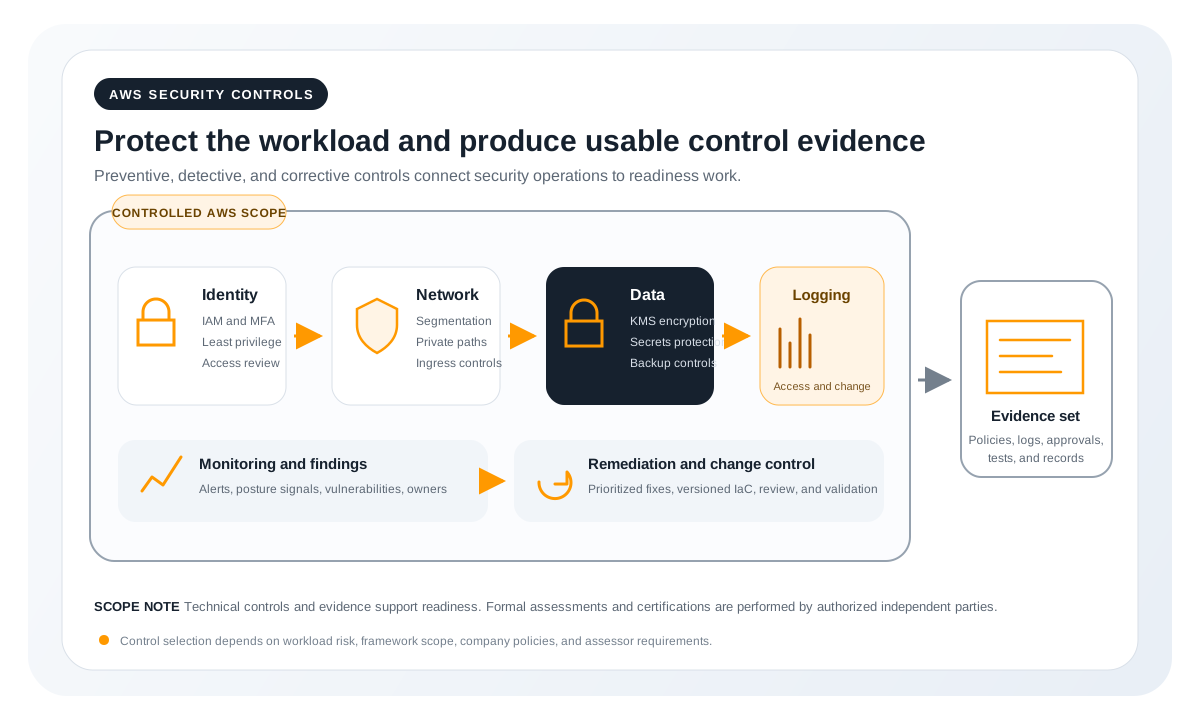
AWS security and compliance control flow covering identity, network, data protection, logging, monitoring, remediation, and evidence
AWS Advanced Tier Services PartnerAWS Advanced Tier Partner★ 4.9/5 on Clutch (9 reviews)Replies within 1 business day

What do AWS security and compliance services do?

AWS security and compliance services assess, implement, and document the infrastructure controls that protect cloud workloads and support a defined compliance program. CodetoKloud helps teams turn control requirements into working identity, network, data protection, logging, vulnerability, recovery, and evidence practices.

This work supports your security and audit readiness, but it is not legal advice, a certification, an audit report, or a guarantee of compliance. Your organization owns its policies and operating controls, while an authorized independent assessor determines any formal audit or certification result.

AWS security control deliverables

The engagement connects each technical safeguard to the workload, evidence, owner, and operating procedure needed to keep it effective.

AWS Security Baseline and Control Map

We inventory accounts, workloads, data paths, trust boundaries, existing safeguards, and known findings. The resulting control map connects technical gaps to the selected framework, risk owner, priority, and evidence source.

Identity and Access Controls

We implement least-privilege IAM, role separation, MFA expectations, workload identities, privileged access paths, credential handling, and access review procedures based on how people and services use the environment.

Network and Data Protection

We design network segmentation, private workload placement, controlled ingress and egress, encryption in transit and at rest, KMS key use, and secrets handling around the actual data flow and threat model.

Logging, Monitoring, and Evidence

We centralize relevant AWS activity, access, workload, and security logs, define retention and alert paths, and organize technical evidence so control owners can retrieve it for an assessor or internal review.

Vulnerability Management and Remediation

We establish asset and image scanning, finding triage, severity and ownership rules, patch or upgrade workflows, exception handling, and verification that agreed remediation work has been completed.

Backup, Recovery, and Team Handoff

We align backups, retention, restore testing, recovery procedures, and resilience controls with workload needs, then hand over diagrams, evidence locations, runbooks, control ownership, and an open remediation register.

From control scope to operational handoff

We begin with the applicable environment and control scope, then implement approved remediation in a sequence your team can verify and operate.

  1. 1

    Confirm scope, obligations, and owners

    We identify the AWS accounts, workloads, data, third parties, selected framework requirements, existing policies, and people responsible for each control. Your legal, privacy, and audit advisors remain responsible for interpreting obligations.

  2. 2

    Assess the implemented environment

    We inspect identity, network, encryption, logging, vulnerability, backup, recovery, and change controls. Findings are documented with risk, affected resources, evidence, dependencies, and a practical remediation sequence.

  3. 3

    Implement and verify technical controls

    We make approved changes through repeatable infrastructure and operating procedures, test expected behavior, review residual risk, and confirm that remediation evidence can be reproduced.

  4. 4

    Prepare evidence and transfer ownership

    We organize technical artifacts, resolve agreed findings, document exceptions, rehearse evidence retrieval, and hand off runbooks and recurring control tasks to named owners before the engagement closes.

Security control work in customer environments

These are attributed results from individual engagements. They show what happened in those environments and do not guarantee the same audit, security, or reliability outcome elsewhere.

Turn your highest-risk AWS gaps into an action plan

Share the workload scope, target framework, recent findings, and assessment timeline. We will identify the technical controls, evidence dependencies, and first remediation steps worth reviewing.

Book an AWS security review

AWS Security Control Technologies

AWS, infrastructure as code, secrets protection, security monitoring, and observability tools support access, data, logging, remediation, and evidence workflows.

AWS logo
Terraform logo
HashiCorp Vault logo
CrowdStrike logo
Prometheus logo
Grafana logo

Engineering guides

Security controls for AI-assisted engineering

Understand prompt injection, excessive permissions, insecure generated infrastructure, secret exposure, and the deterministic controls that should block unsafe changes.

How AI is changing DevOps

Separate faster task completion from delivery outcomes, then measure the added change volume, review demand, risk, and operating cost.

Read the guide

Reviewing AI-generated infrastructure as code

Use deterministic validation, policy checks, plan review, approval gates, staged deployment, and rollback for Terraform and Kubernetes changes.

Read the guide

AI for cloud and Kubernetes incident response

Start with evidence gathering and recommendations, then define the production actions that still require explicit human approval.

Read the guide

Securing AI coding agents in CI/CD

Limit agent permissions, protect secrets, isolate execution, enforce deterministic security checks, and retain a human production gate.

Read the guide

AWS security and compliance FAQs

Answers about technical scope, audit boundaries, evidence, remediation, and ownership after handoff.

What does an AWS security and compliance engagement include?

A scoped engagement can include architecture and configuration review, control mapping, IAM, network segmentation, encryption, secrets protection, logging, evidence workflows, vulnerability management, backup and recovery, remediation, documentation, and team handoff. The exact work depends on the workloads, data, framework, existing controls, and assessment timeline.

Does CodetoKloud certify that our organization is compliant?

No. CodetoKloud implements and documents cloud infrastructure controls. We do not provide legal advice, issue SOC 2 reports, perform PCI DSS assessments, certify HIPAA compliance, or guarantee an audit result. Independent auditors, qualified assessors, legal counsel, and your organization determine the applicable requirements and formal outcome.

Can you work with our auditor or compliance advisor?

Yes. With your approval, we can explain the AWS architecture, provide requested technical evidence, clarify how a control is implemented, and remediate agreed infrastructure findings. The auditor or advisor remains independent and decides whether the evidence satisfies the relevant criteria.

What evidence can you help prepare from AWS?

Depending on scope, evidence can include approved infrastructure changes, IAM and access records, network diagrams, encryption settings, CloudTrail and configuration records, vulnerability and remediation records, backup policies, restore test results, monitoring alerts, and operating runbooks. Evidence is tied to a named control and owner.

How do you handle security findings and vulnerabilities?

We record the affected asset, severity, context, owner, expected action, and target date. Remediation can include configuration changes, patching, dependency or image updates, access changes, compensating controls, or a documented risk decision. Completed work is verified and the supporting evidence is retained.

What happens after the initial remediation project?

We hand over diagrams, infrastructure code, runbooks, evidence locations, recurring control tasks, open risks, and named ownership. CodetoKloud can also support an ongoing control and remediation cadence when the responsibilities and response expectations are defined in the engagement.