
Discovery and Experience Review
We align business goals, user groups, product constraints, existing evidence, and the decisions the design must help the team make.
CodetoKloud turns complex product workflows into clear, testable interfaces through user journeys, information architecture, prototypes, reusable components, and an engineering-ready handoff.
User experience design defines how people understand and complete a task within a product. User interface design defines the visual controls, layout, content, states, and responsive behavior that support that journey. Strong product design connects both to a measurable user and business outcome.
CodetoKloud designs SaaS, web, and mobile experiences in close connection with engineering. We focus on reducing uncertainty, testing important flows early, and delivering reusable interface decisions that can be implemented and maintained.
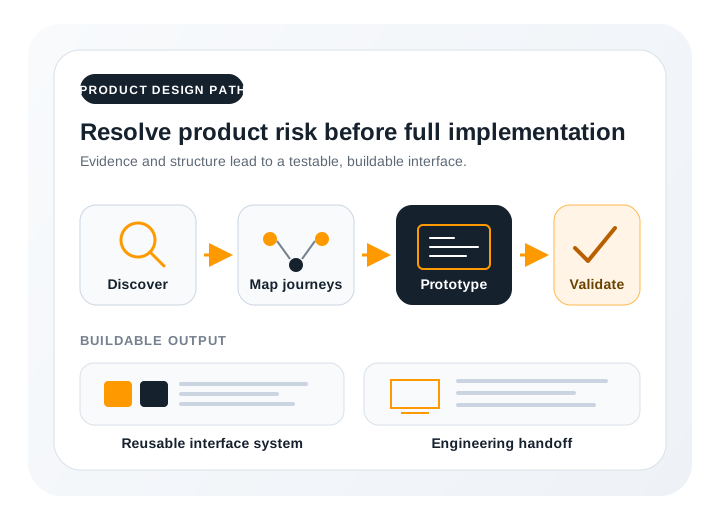
The work moves from evidence and structure to a validated interface and a clear implementation handoff.
We align business goals, user groups, product constraints, existing evidence, and the decisions the design must help the team make.
We map how each priority user reaches an outcome, including decisions, permissions, content, errors, and handoffs that can make the journey succeed or fail.
We organize navigation, page hierarchy, content, and screen structure before visual detail makes changes slower and more expensive.
We create realistic prototypes for important journeys so stakeholders and representative users can respond to the behavior, not only static screens.
We define reusable patterns for typography, color, layout, controls, states, and responsive behavior to keep the product coherent as it grows.
We document behavior, responsive states, accessibility considerations, assets, and acceptance details, then work with engineers to resolve implementation questions.
The goal is not to produce more screens. It is to resolve the highest-risk product questions before they become expensive code.
We clarify the users, business outcome, constraints, existing evidence, and the specific uncertainty the design work needs to reduce.
We examine how the task works today, identify friction and missing information, then prioritize the moments that matter most to the user and the business.
We move from low-detail structure to an interactive prototype, focusing first on complex permissions, decisions, data entry, and responsive behavior.
We review the design with stakeholders and representative users when available, document the system, and stay involved as engineering turns it into working software.
Bring the workflow, user group, existing product, known evidence, and business goal. We will help you define the design question and the right validation path.
Tools support the process, but the engagement is organized around user evidence, product decisions, reusable patterns, and a buildable handoff.





Answers about redesigns, user validation, design systems, deliverables, and engineering handoff.
A typical engagement includes discovery, user and stakeholder input, journey maps, task flows, information architecture, wireframes, interactive prototypes, visual design, reusable components, responsive states, and engineering handoff. The exact mix depends on the product decision and evidence already available.
Yes. We can assess the current experience, identify the journeys creating the most user or business friction, and produce a staged design plan. This lets engineering improve priority areas while preserving sound parts of the existing product.
We can plan and facilitate usability sessions with representative users when access, recruitment, and scope support it. When direct research is limited, we make assumptions explicit, use available support and analytics evidence, and identify what should be validated after release.
Yes. We can create or extend a practical component system covering foundations, reusable interface patterns, responsive behavior, states, accessibility notes, and usage guidance. The depth should match the product size and the engineering team that will maintain it.
We provide inspectable design files, component behavior, assets, responsive states, and acceptance details, then review implementation questions with the engineering team. Early technical input helps avoid designs that are expensive or impractical to build.